
A June Instagram video captured guests arriving for an evening out at a $43 million estate in Greenwich, Connecticut. Inside, they clicked tiles with Gold Coast Mahjong, a local club offering elevated American mahjong experiences.
The founders had been tapped by real estate broker Ryan Serhant to outfit the luxury estate’s cavernous rooms with mahjong tables, and the video caught players mingling on the waterfront lawns while sipping cocktails aptly named Mahjong Moonlight Splash.
Mahjong is everywhere in the tri-state area. While it never disappeared, the centuries-old game has far outgrown its reputation as a grandmother’s pastime. In Manhattan’s Chinatown, Gen Z players slap tiles over food and drink catered from the city’s top-rated restaurants. And in Connecticut, young women flock to retreats, like the one Gold Coast offered at the Mayflower Inn in Washington earlier this year. Starting at $1,650 per person, participants could indulge in two nights of spa treatments, astrology and, of course, daily mahjong sessions. The retreat sold out.
Mahjong’s explosion in popularity appears to be linked to a post-pandemic desire for connection. Players say they crave sensory, analog experiences in an age of digitization and AI. For others, the allure is in the beauty of the tiles themselves — the most coveted sets can easily fetch up to $600.
In the tri-state area, American, Hong Kong and the Japanese-style riichi mahjong dominate as the most popular styles of play. For those who aren’t familiar with the rules, mahjong is loosely a tile-based cousin of gin rummy. Most Asian styles let players assemble winning hands freely, while American mahjong relies on a standardized card of preset hands and eight additional joker “wild cards.”
But when someone says “mahjong,” they could be referring to any one of over 40 distinct variations, each with its own rules and traditions, all demanding some combination of strategy, skill and luck.
Mahjong’s evolution means some players gather around vintage sets passed down through generations. Some play for cash. Others compete in tournaments where mahjong is treated as a sport. Along the way, the game has also become the center of cultural debates over appropriation vs. appreciation.
How did mahjong come to the U.S.?
Mahjong emerged in 1800s China near Shanghai, where it was mainly a male gambling game. Its path to America is largely credited to Joseph Park Babcock, a Standard Oil representative who returned home from China in the 1920s and helped market the game to an American audience.
Aided by Hollywood stars, similar to influencers today, the game fueled a nationwide craze. Soon, President Warren G. Harding and first lady Florence Harding were playing in the White House. So were wealthy families like the Vanderbilts. Glossy magazines featured players gathered around ornate sets, while department stores filled display windows with mahjong tiles. At the height of the Roaring Twenties, mahjong was a marker of cosmopolitan taste.
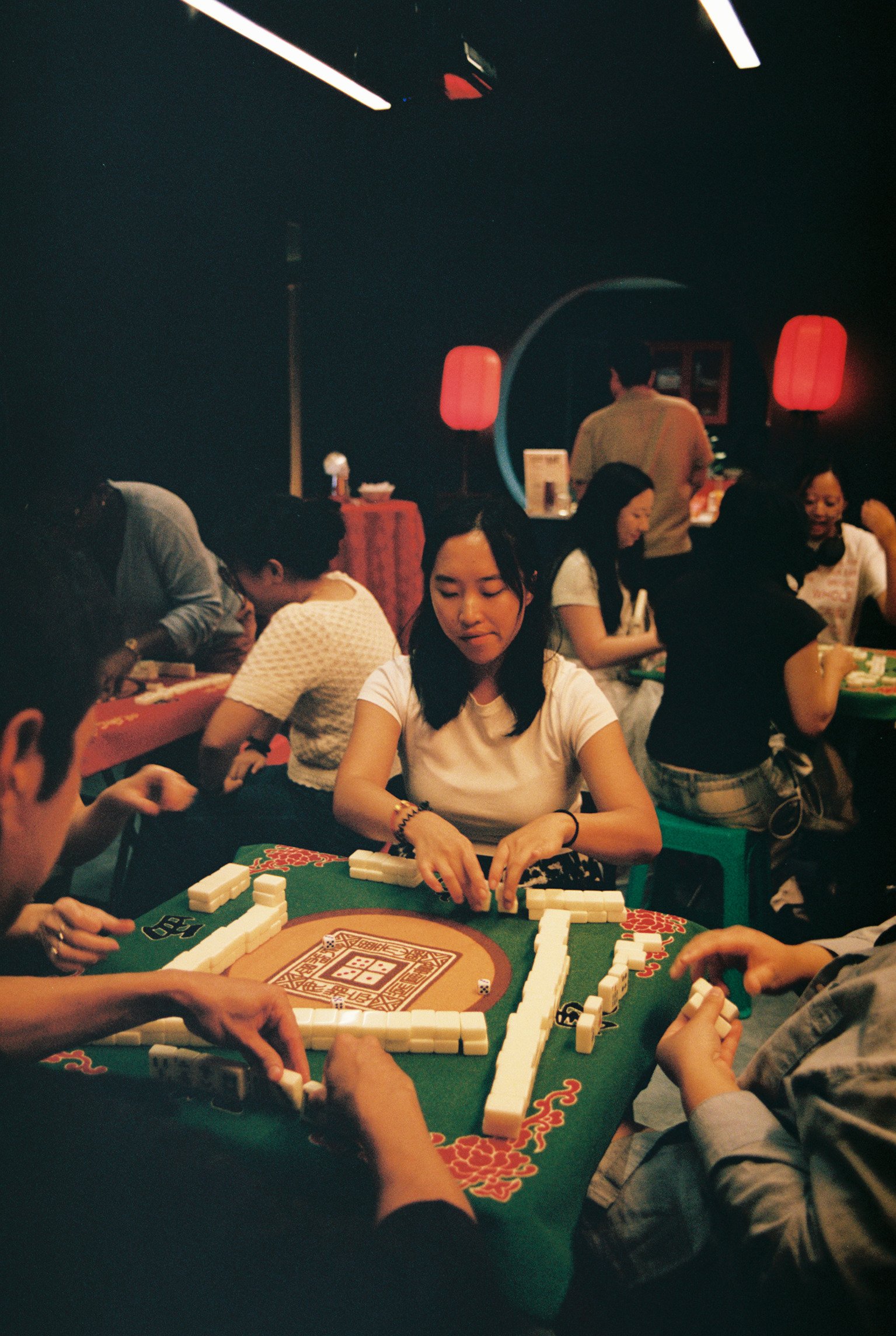
Nearly a century later, young Asian American entrepreneurs in New York City are using mahjong as an opportunity to reconnect with their culture.
At a recent event in Manhattan’s Chinatown, I spoke with Sarah Teng, one of the founders of The Green Tile Social Club, where they play Hong Kong style mahjong.
When I arrived at the Phoenix Palace around noon, young men and women were already slapping tiles, sipping drinks at the bar and eating popcorn chicken catered from Potluck Club, one of the city’s hottest Cantonese-American restaurants. The crowd on Bowery was mostly Asian and Gen Z, a demographic Teng said has surprised older players like her parents.
“They’re always so confused, like, ‘Oh, how are young people playing mahjong?’” she joked.
Green Tile was founded in 2022 as a way to socialize post-pandemic and encourage Asian Americans to connect with their culture, Teng said. The demand for mahjong was immediate. Their events would sell out in an hour, she said. Four years later, that hasn’t changed.
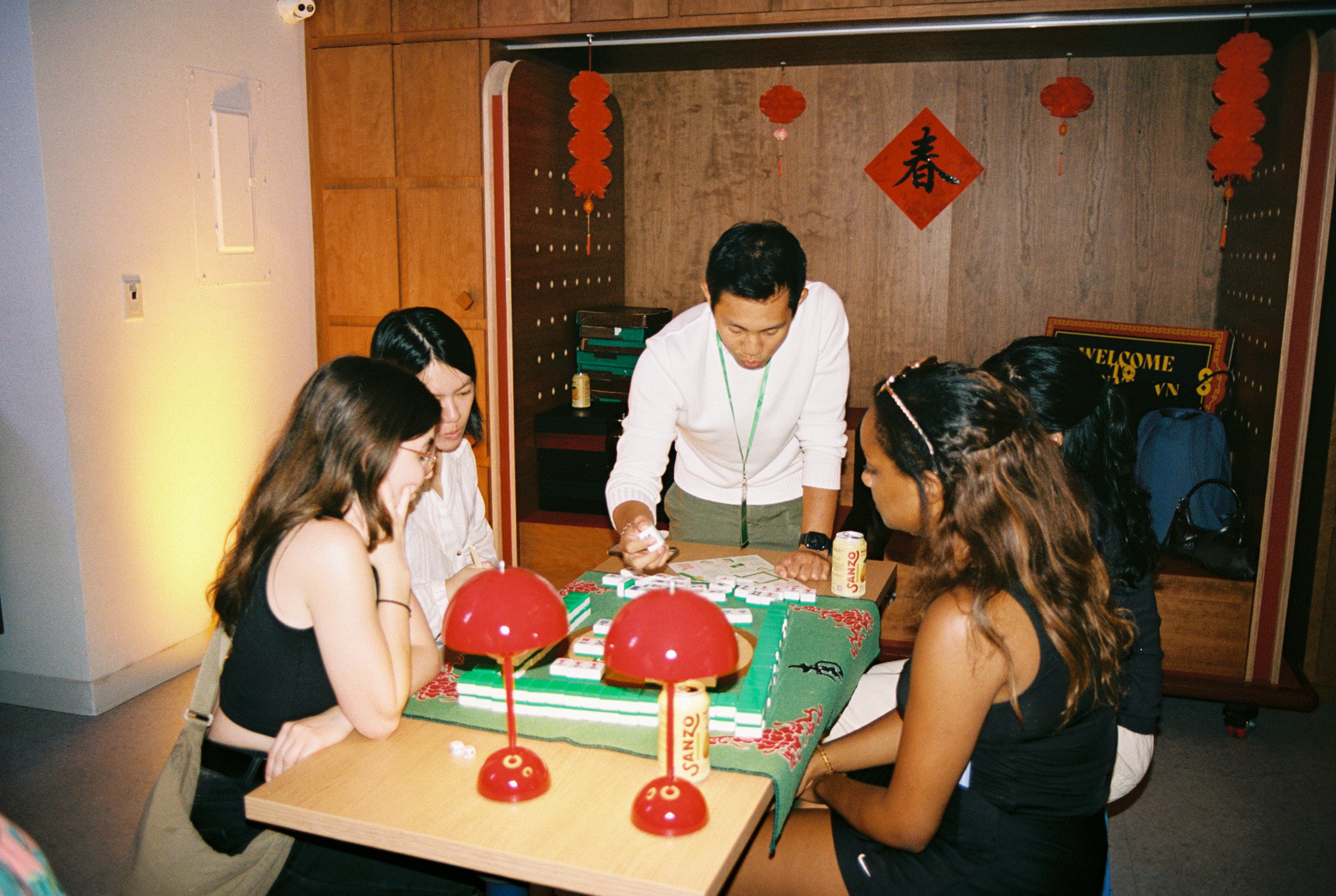
For some players, growing up Asian American meant that cultural self-consciousness and a desire to assimilate often kept the game at home. Teng is from Austin, Texas, where “we didn’t talk about being Asian,” she said. Mahjong was never a topic of conversation in her household when she was young, and she didn’t learn how to play until she was an adult.
A few months ago, Teng’s family played mahjong together for the first time during her sister’s baby shower. Over the table, her dad boasted about being a real hustler when he played Taiwanese mahjong as a kid. None of the players at Green Tile play for money, which is difficult for her dad to comprehend, Teng said.
Mahjong has brought Teng closer to her parents in ways she never expected, she added. “I feel like we’re still discovering so much about each other.”
Learning how to play mahjong
Like Teng, I didn’t grow up playing mahjong, even though both of my parents are from China. Luckily enough, a Green Tile staffer at the Phoenix Palace was intent on teaching me.
As Chris Kumaradjaja explained the different suits, I asked him why he started playing.
The social aspect of the game was a big motivator. “It’s a bit of a catalyst for conversation,” he said. Basically, he clarified, a round could mean the start of a new friendship, or a silent, focused battle between “life or death.”
I really liked the sound of the former, and not so much the latter. Most beginners start off with “chicken hands,” or mahjong in easy mode. After an hour, you can graduate to scoring hands.
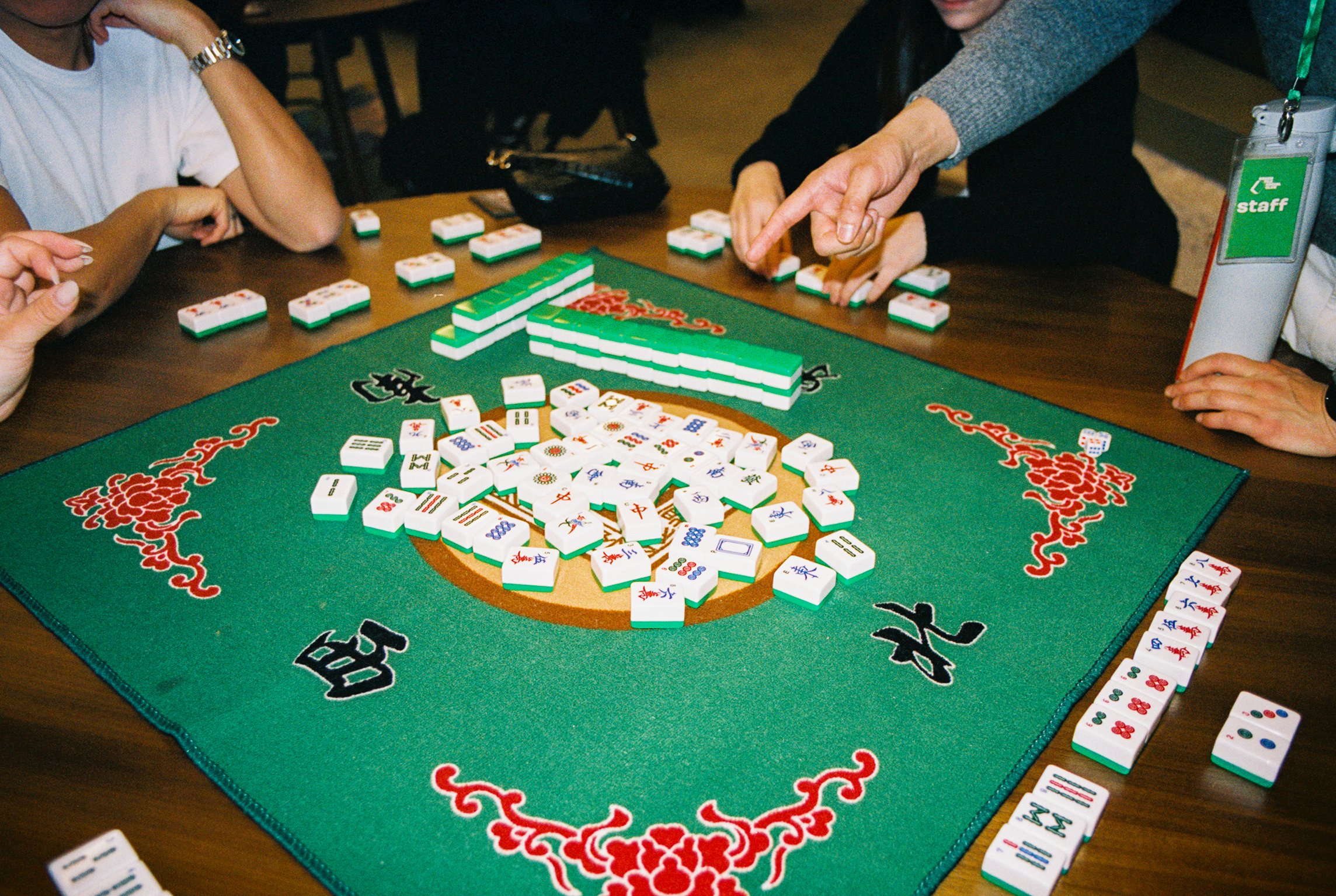
But I soon found out that I wouldn’t have the luxury of puttering around the kiddie pool. That was partly my fault — I hadn’t gone on a beginner’s night. As I hesitantly took my seat among a ring of seasoned players and constructed my tile wall, the puniest line of defense imaginable against the sharks, an atmosphere of concentration settled over the booth. Players crossed their arms and leaned back to read the table, scan discards and update their strategy.
For experienced players, tile counting and decision making goes by fast, albeit with great deliberation. I slowed them down by occasionally grabbing the wrong tile, mistakes my table graciously corrected. Fingers tapped rapidly against felt mats. Chins were propped on fists. Around us, exclamations over a rare hand, accompanied by the rhythmic cascading of tiles, created a comforting chatter in the background. The noise made by the shuffling tiles is similar to a flock of sparrows, the bird after which the game was named.
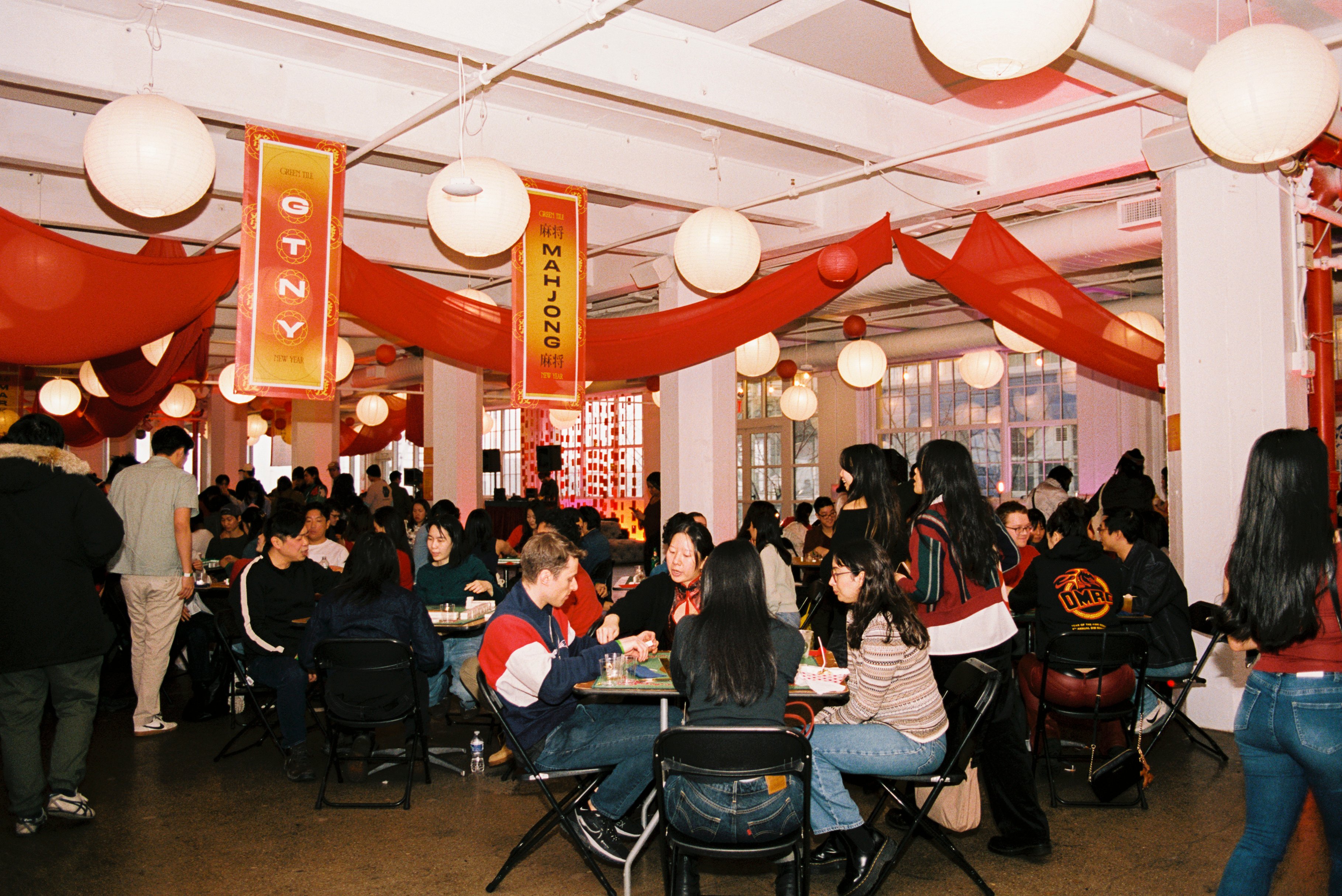
To nobody’s surprise, I didn’t win any of the four sets, each taking around 15 minutes. But by the third round, I felt something click. I was getting better — I’d managed to form four sets of three — but was beaten by the young woman to my left, who managed to complete a pair and call mahjong.
Many players told me the game is an addiction. I didn’t believe it, until I went home and started practicing online. I won my first game against bots, then a second, then a third. I was in love.
For the rest of the week, I kept practicing. I even booked a ticket to play in another mahjong league for the following week. This time, I made sure my opponents were beginners.
Is mahjong a sport? Riichi players think so
My next stop was a studio in midtown Manhattan called Sparrow’s Nest. There, they play riichi, a Japanese style of mahjong that has been one of the only traditions to be professionalized as a sport. The club is often spotted at New York Comic Con — it set up 15 tables to teach people there last year.
If Hong Kong mahjong is fast and furious, riichi is dynamic, said Dave Resnick, founder of Sparrow’s Nest and the United States Professional Mahjong League, which hosts international riichi tournaments. The Japanese variant has stricter winning requirements, a heavier emphasis on defensive play and a more complex scoring system.
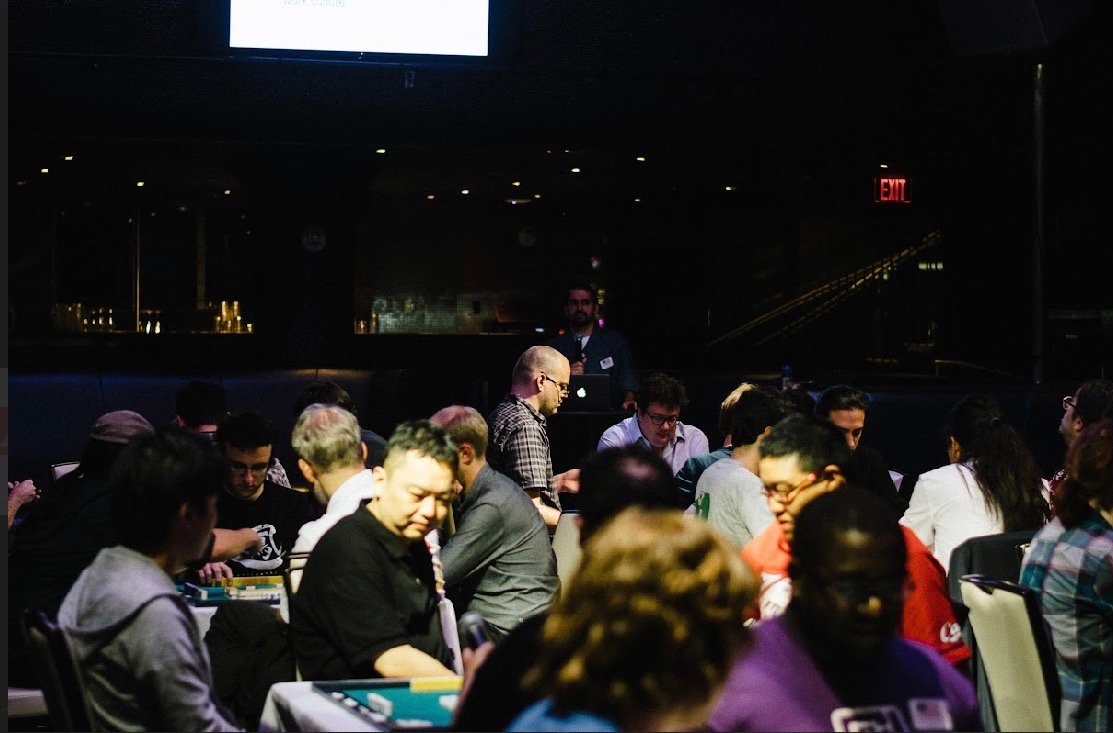
These features require more interaction among the four players who must decide whether to keep pushing for a winning hand or shift into defense and let someone else take the risk, Resnick said.
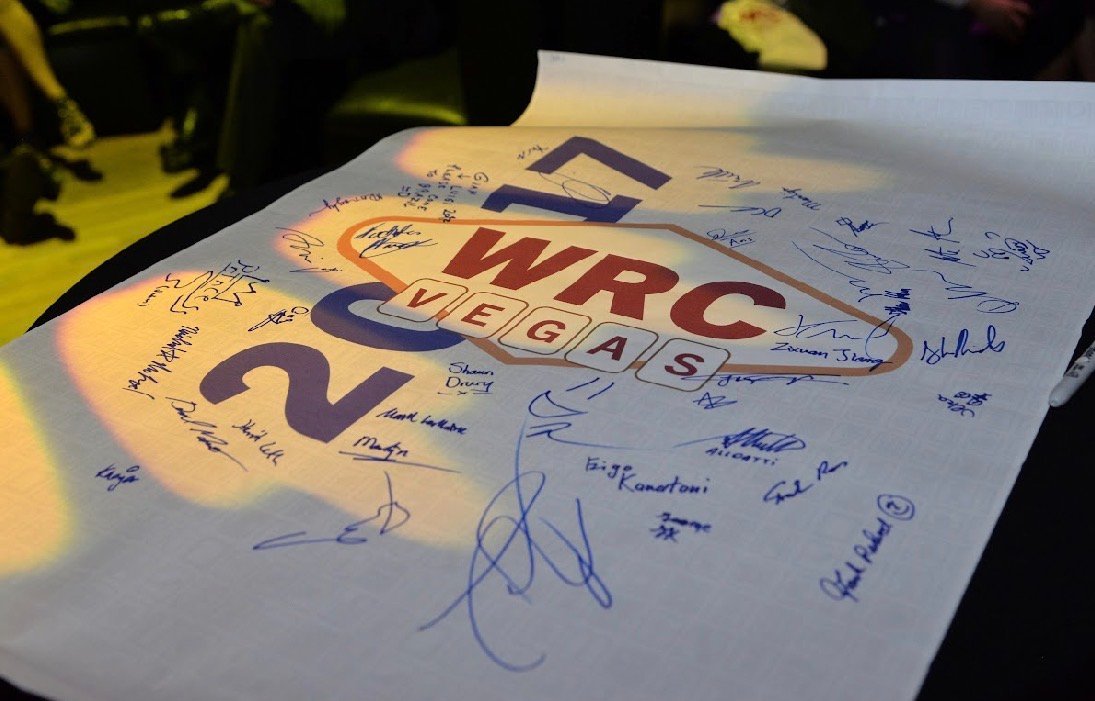
In 2017, he hosted the World Riichi Championship in Las Vegas. He wanted the tournament to feel like a major sporting event and so over five days, 240 players moved between rooms packed with mahjong tables while large screens tracked match times.
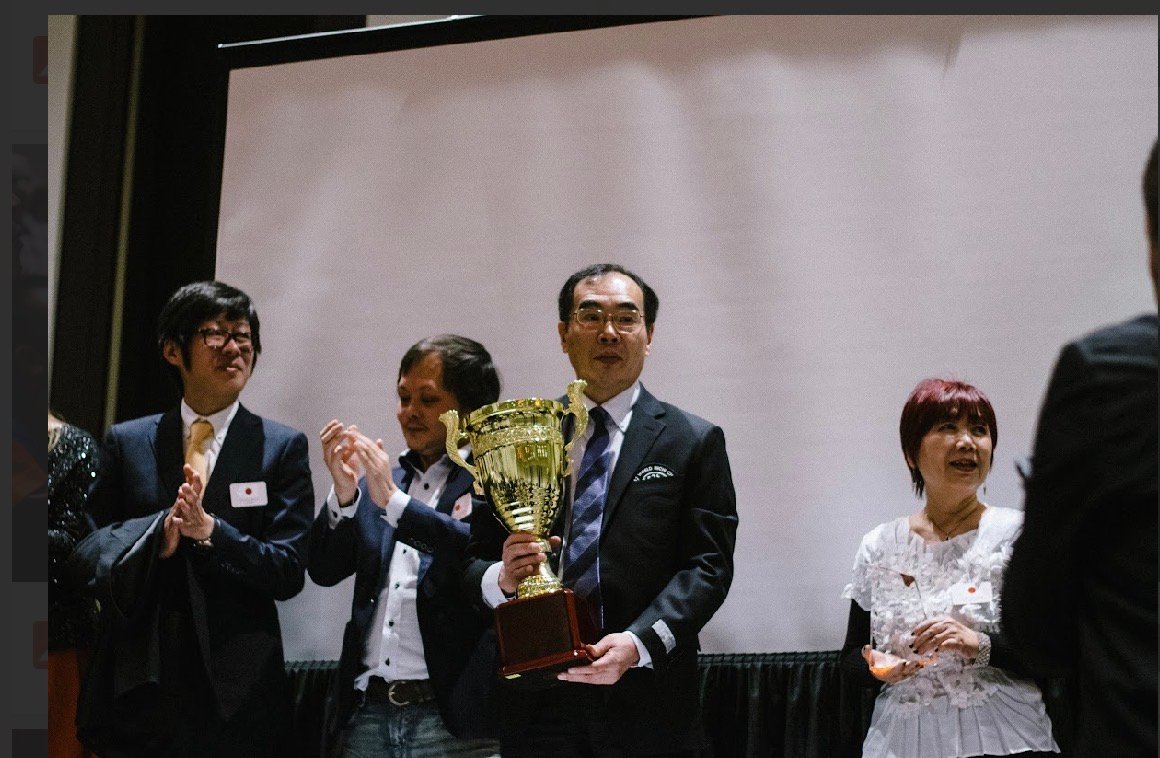
The idea grew out of Japan’s mahjong culture, Resnick said. In the 1980s, mahjong occupied a place similar to golf. Nearly everyone played, and the game pervaded business circles. That’s when players started thinking about holding tournaments to find out who’s the best.
Skill reveals itself over the long term, he added, but it’s mahjong’s status as a “great equalizer” — where anything can happen in a single game, and anyone can win — that keeps players coming back.
“It’s really never the same experience twice,” he said.
Jewish American women forged American mahjong culture
By the 1930s, a new mahjong tradition was taking shape in the United States.
American mahjong, formalized by the National Mah Jongg League in 1937, revolves around an annually updated card of preset winning hands. This version of the game has developed its own rituals and vocabulary, from tile racks and coin purses to table snacks and a distinctive shorthand.
American mahjong culture was shaped by Jewish women in the New York area during and after World War II. The game spread through predominantly Jewish social networks that had formed due to antisemitic exclusion. As Jewish families moved to the suburbs after the war, mahjong moved with them, becoming a fixture of suburban life and a lifeline for many young mothers adjusting to new communities.
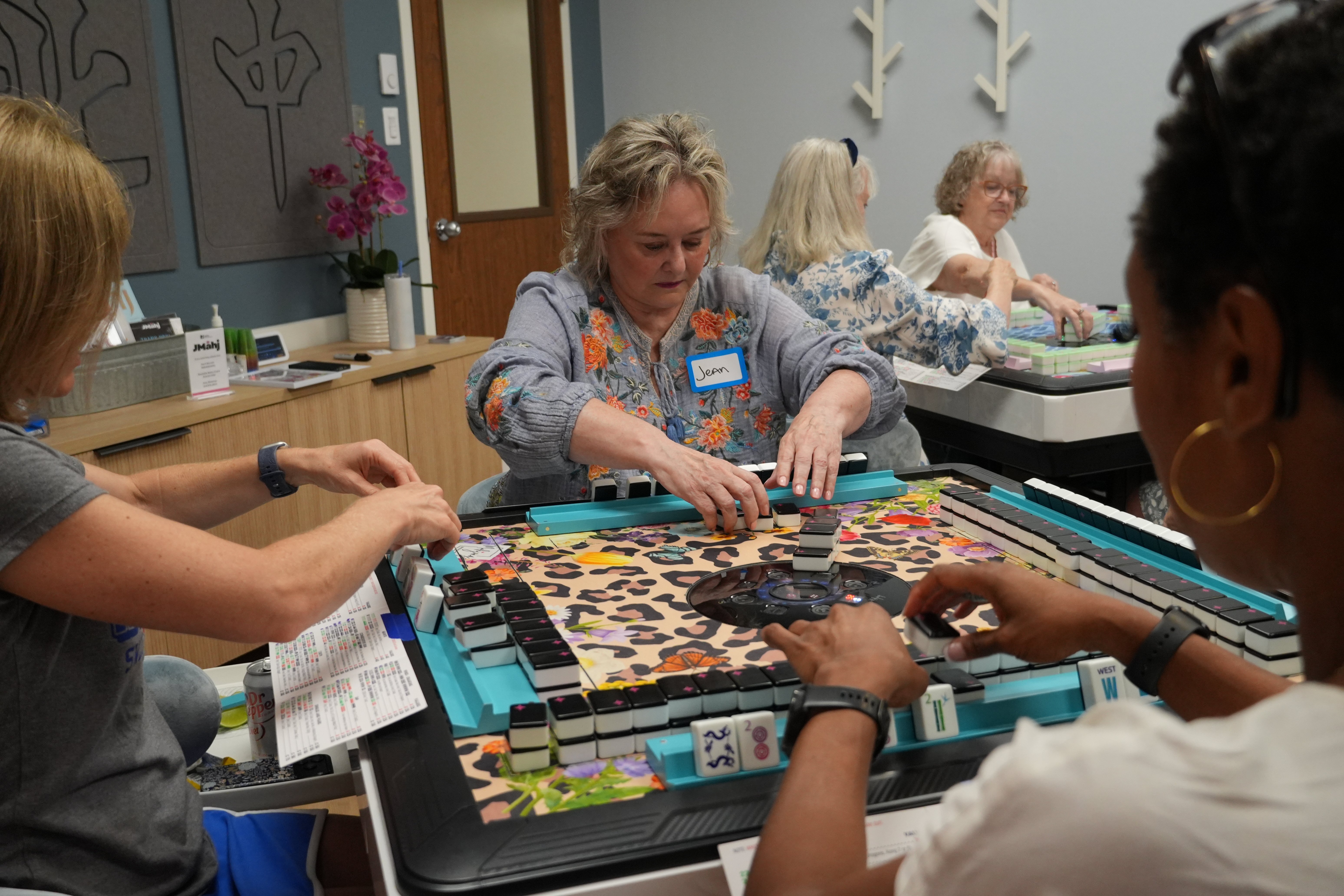
The current revival has been fueled in part by those same networks, making mahjong more diverse than ever, historian Annelise Heinz said. Heinz began researching the game and its “virtually forgotten historical record” in grad school, after a question she always had growing up — “Why do the mothers of my Jewish friends all play a Chinese game?” — yielded mostly theories and misinformation online, she said. She has since authored a book narrating the history of the game, “Mahjong: A Chinese Game and the Making of Modern American Culture.”
Heinz said that many baby boomers are now passing down mahjong, while their daughters, who often grew up around the game without learning it, are returning to it later in life and teaching friends, spouses and neighbors how to play.
Karli Ward, the special event and hospitality director at the Aaron Family Jewish Community Center of Dallas, is one of them. Learning mahjong was a lifelong goal, she said, but she didn’t seriously pursue the game until she met her husband in 2020.
The woman who would become her mother-in-law was a mahjong instructor who taught many members of the Jewish community how to play. When Ward asked to learn, her husband’s mom told her to bring a group of four people; she wouldn’t teach her one-on-one.
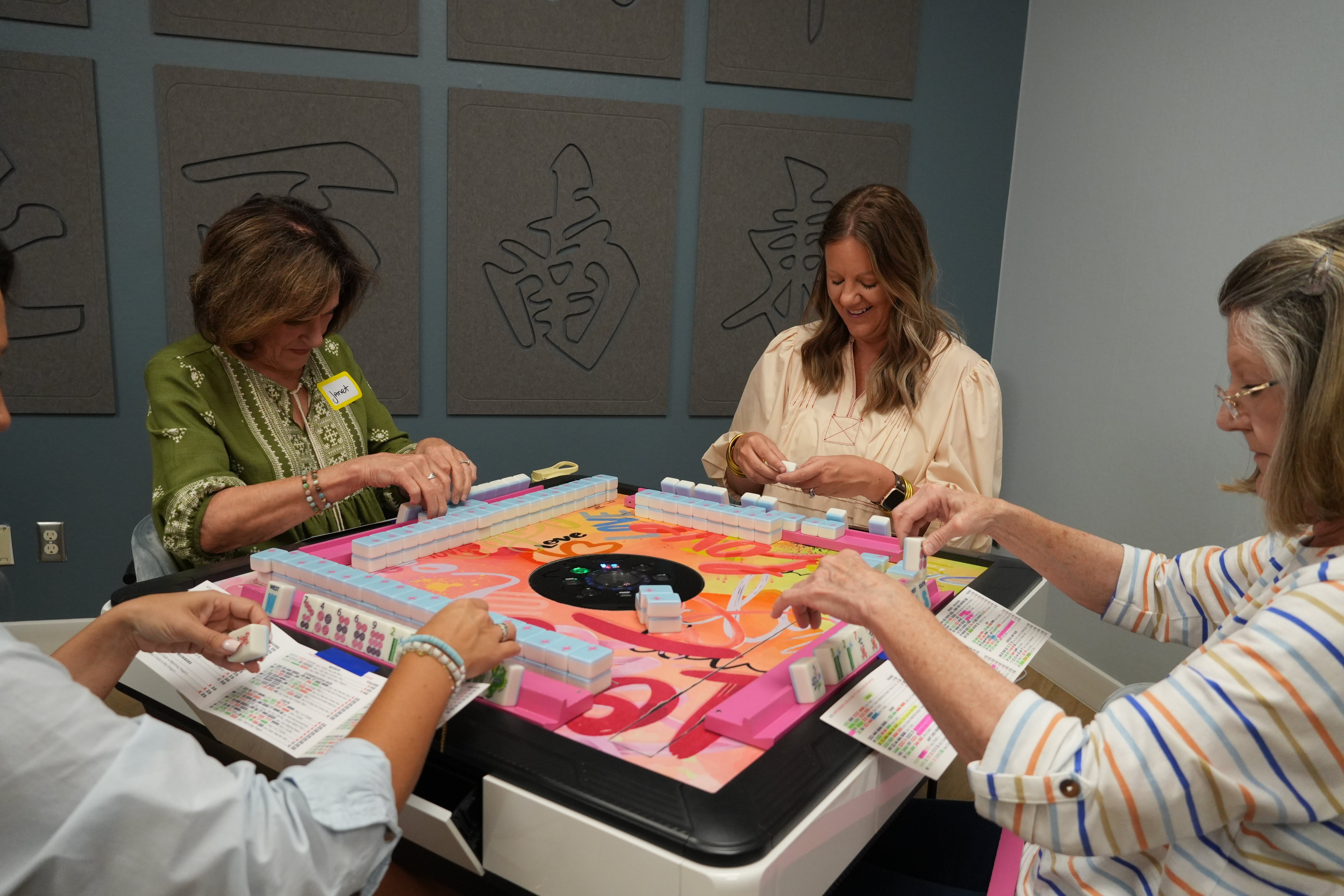
After learning the game, Ward brought lessons to the Jewish Community Center, known as the J. Today, the center hosts classes, a league and tournaments where players of all ages compete against one another. Recently, a 10-year-old player faced off against a senior.
“It’s a joke that everyone in the Jewish community plays mahjong,” Ward said. The game is one of the traditions passed down over generations.
For Jake Wertheim, the J’s digital marketing manager, that tradition looked like weekly mahjong nights hosted by his mother when he was a kid.
“It was my mom and fellow Jewish ladies, for the most part,” he said. “My mom would set up tables. She’d come home from work early, put the tables in the living room, move the couches out, have everything ready and set out bowls of peanut M&Ms and other snacks. She’d tell me not to eat them because they were for her mahjong.” Peanut M&Ms still make an appearance in the J’s mahjong room today.
Mahjong, he added, is about more than the game itself. People come for the snacks, the company, the drinks —and the chance to dress the part. At tournaments, players show up wearing mahjong shirts, hats, earrings and necklaces. As Wertheim put it, “You’re all in.”
Mahjong’s high-glamour rebranding in the South
Mahjong is a particularly adaptable game. “The tiles themselves are a canvas,” historian Annelise Heinz said, and they allow for endless variations in imagery and symbolism, often related to local identity.
That flexibility has sparked cultural controversy, particularly in the South.
In Texas, a hub of the mahjong boom, companies founded by entrepreneurs who are neither Jewish nor Asian American sell tiles with designs that stray from the game’s traditional iconography. One Dallas-based company, The Mahjong Line, aligns the tile suits with the theme of each set. In the $485 Ranch Line, for example, tiles with Chinese characters become horseshoes, bamboo become cacti, and circles become sunsets.
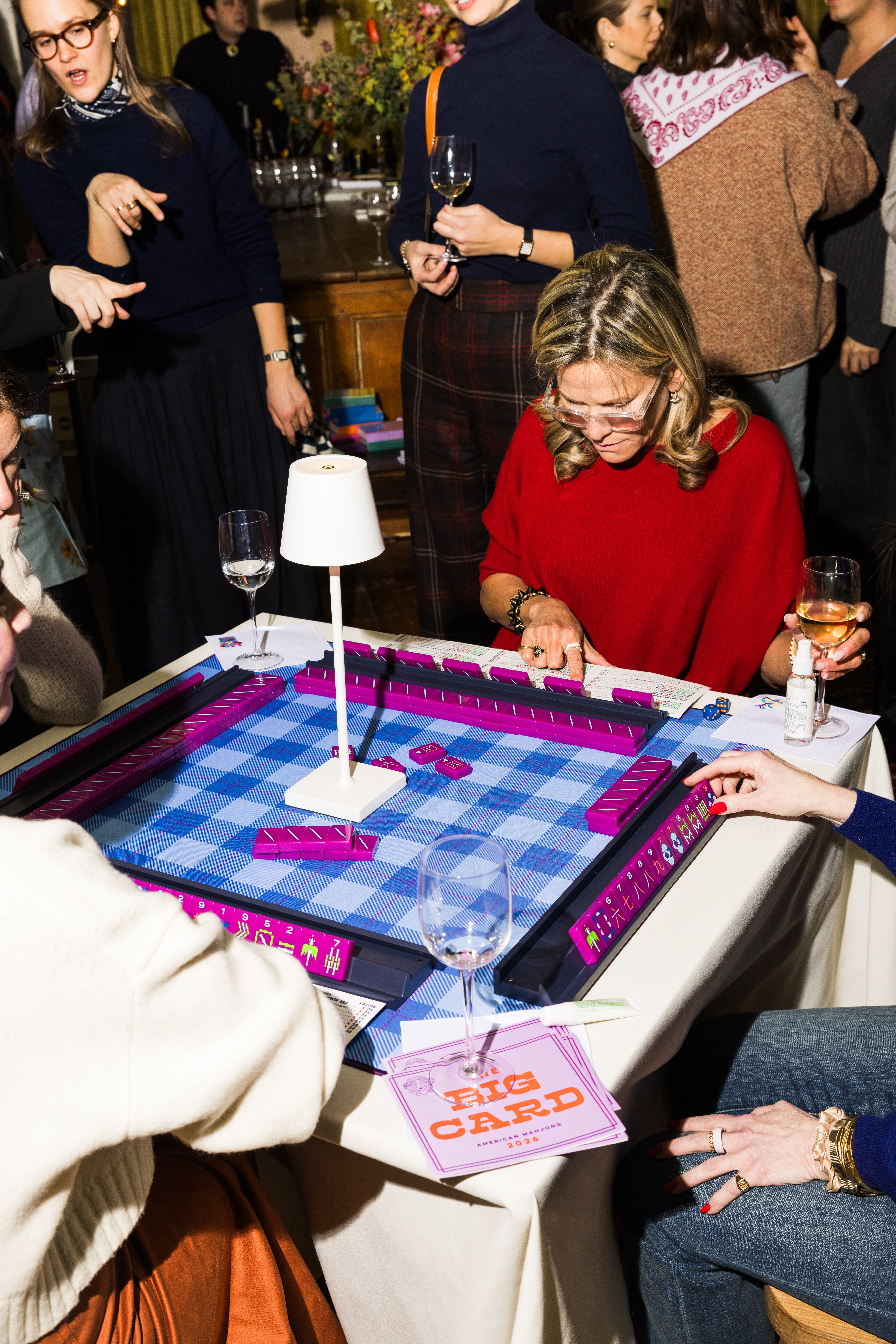
The glitzy sets often cater to a distinctly Southern aesthetic of hosting and femininity, Heinz said. Game runners coordinate their sets, tabletop décor and even the cocktails they serve, adding an aesthetic, material element to the game.
The breakthrough came during the COVID-19 pandemic, when three players in Highland Park, Texas, decided to redesign mahjong’s classic white tiles with Pantone colors and custom artwork. The Mahjong Line is part of a group of businesses founded in Dallas over the last six years that have become many of the country’s leading mahjong companies.
Brands like My Fair Mahjong, Oh My Mahjong, and Bespoke Mahjong all sell tile pushers, floating game mats, and a wide array of tile sets. There are mahjong-themed hats, cups, and carrying cases, as well as mahjong mats and racks in teal, hot pink or cheetah print.
Many of The Mahjong Line’s most popular themed sets are sold out online. That includes the Foodie Line, whose joker tiles feature playful illustrations of martinis and pizzas. Who is the foodie gal? The “consummate host and connector” whose “unofficial amuse-bouche is a game of trivia” and whose “post-dinner palate cleanser is karaoke,” according to the product description on the brand’s website.
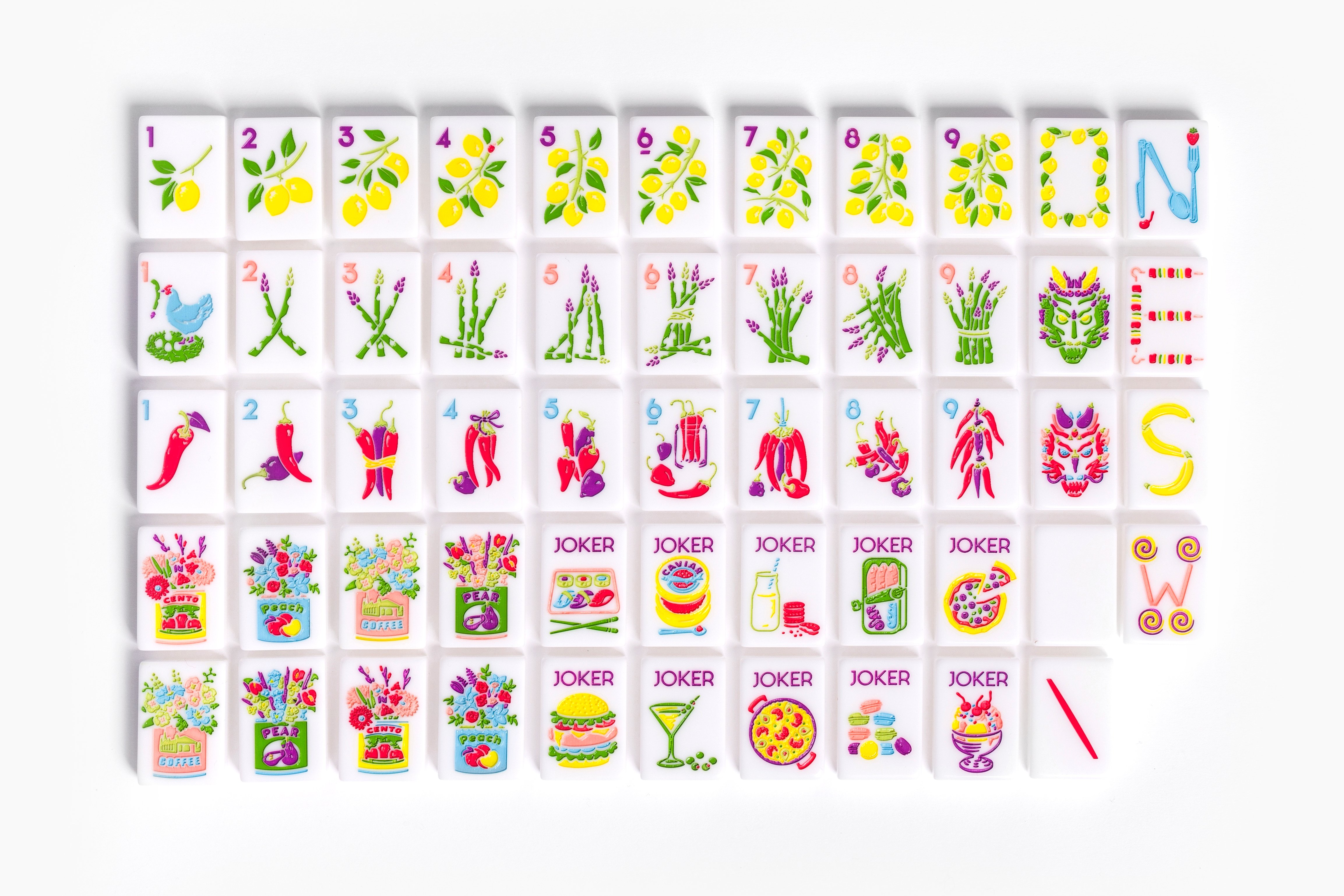
The redesigned sets quickly sparked controversy. Critics were outraged when the brand coined the Pantone-colored tiles as a “respectful refresh” of traditional tiles — which, “while beautiful, were all the same,” the website once read. The original tiles contained “unnecessary” Chinese symbols, and the brand aimed to replace them with “minimal designs” for new players, according to the site’s FAQ section before it was updated.
Kumaradjaja, who is part Chinese, Indonesian and Jamaican, said his mixed heritage has shown him that identities are based on cultural exchange. The evolution of mahjong isn’t the problem, he said, but the idea that Chinese characters are “just symbols” for some players is degrading.
Teng took issue with the fact that some American mahjong players have inherited a game they don’t fully understand or appreciate, she said.
Green Tile was founded by Asian Americans for Asian Americans, and that community still makes up about 85% of its players, she added.
The Mahjong Line founders have since apologized for their “failure to pay proper homage to the game’s Chinese heritage” and updated their website and social media to include educational content about mahjong’s origins. Similar backlash followed Oh My Mahjong last March, after its sets were featured in a New York Times article about playing games with decor.
Kate LaGere, one of The Mahjong Line’s three founders, emphasized the importance of learning the Chinese history of the game. At the same time, there is a large market for the products that the company designs, she said.
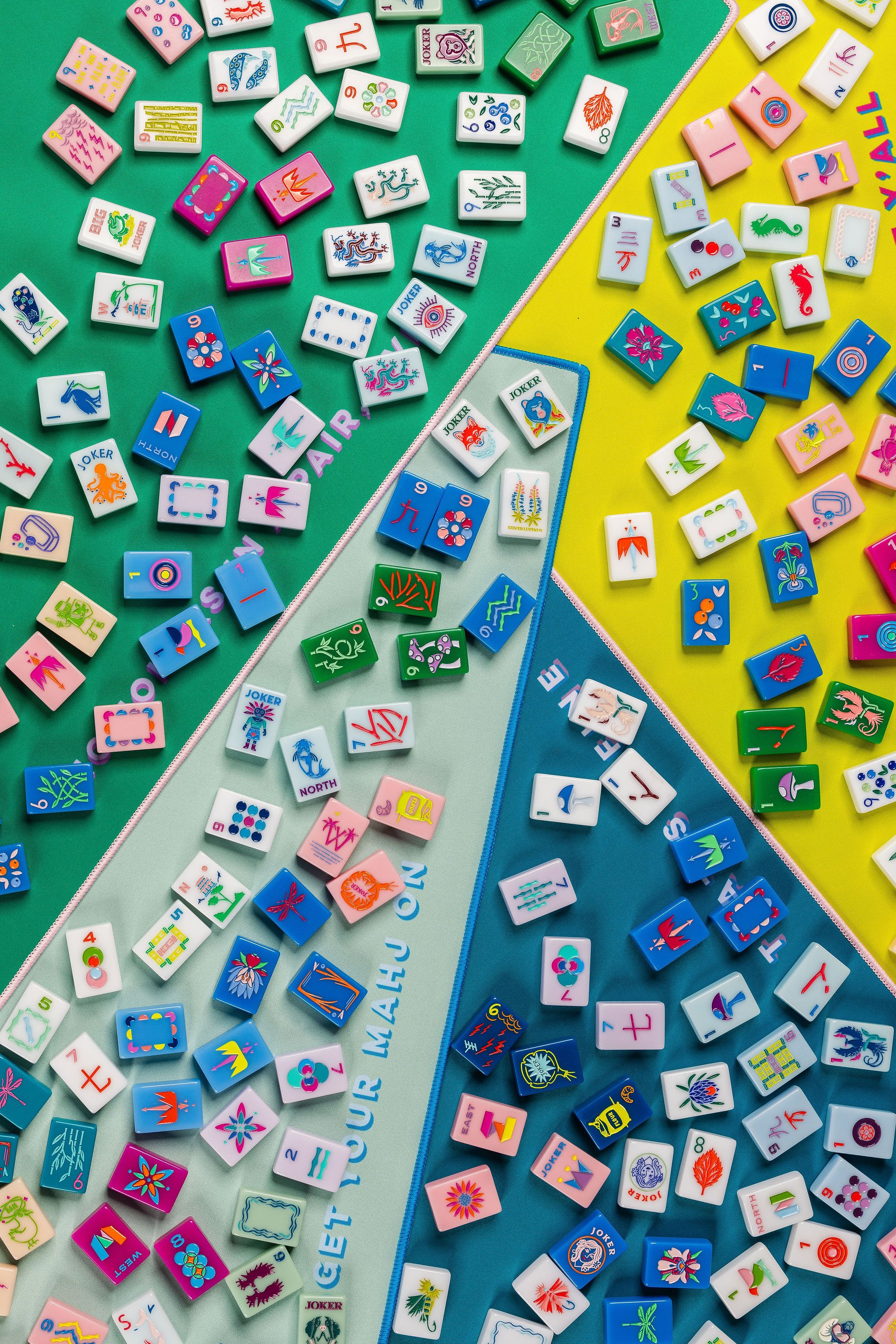
“We unabashedly use creativity and originality and color to a game that we love,” LaGere said. “We have grown this game and brought more women into the fold of American mahjong, and we’re super proud of that contribution.”
Heinz remains hopeful that mahjong can open broader conversations about racism and growing up Asian American in the United States. The game’s complex history continues to unfold at a moment of heightened attention toward China, she said, both as a geopolitical concern and a point of cultural objectification.
“Mahjong retains its really valuable place in American culture as a bridge across difference, and I think it can play that role,” Heinz added.
Mahjong isn’t going anywhere
Players and league organizers believe the signs are clear: mahjong is here to stay.
Part of its lasting power is built into the game itself. Mahjong is played with four people, creating a recurring reason to gather.
As model Cindy Crawford put it, the game is “a great excuse for women to get together” and an incredible mental exercise. Even on the road, Crawford practices on the Real Mahjong app, which can only be accessed by players with an official National Mah Jongg League card.
Crawford had never heard of the game growing up in Illinois, and it wasn’t until she met Heidi Brooks, co-founder of an exclusive mahjong league in Los Angeles, that she really “got into it,” she said. Since then, whenever she has the chance to play, she usually says yes.
The game’s recent surge in popularity has invited comparisons to pickleball. But its cultural power extends beyond its current moment — it has long served as a way for newly formed or displaced communities to build community, Heinz said. During and after World War II, for example, the Air Force Officers’ Spouses Club developed its own variant, Wright-Patterson mahjong, which is still played by officer spouses on Air Force bases around the world.
One of mahjong’s greatest rewards is the unlikely groups of people it brings together, league organizers say. Every game needs four players, and strangers often become regulars.
“I’ve seen people who have seemingly nothing in common come together, leave as friends and continue to play,” Emily Brown, co-founder of Gold Coast Mahjong, said.
This story uses functionality that may not work in our app. Click here to open the story in your web browser.



0 Comments